How to start a faceless YouTube channel with Doodaro (2026)
A plan for a faceless YouTube channel of hand-drawn videos: pick a niche, write a channel brief, make a 3-video pilot in Doodaro, package it, set a cadence.
Last checked
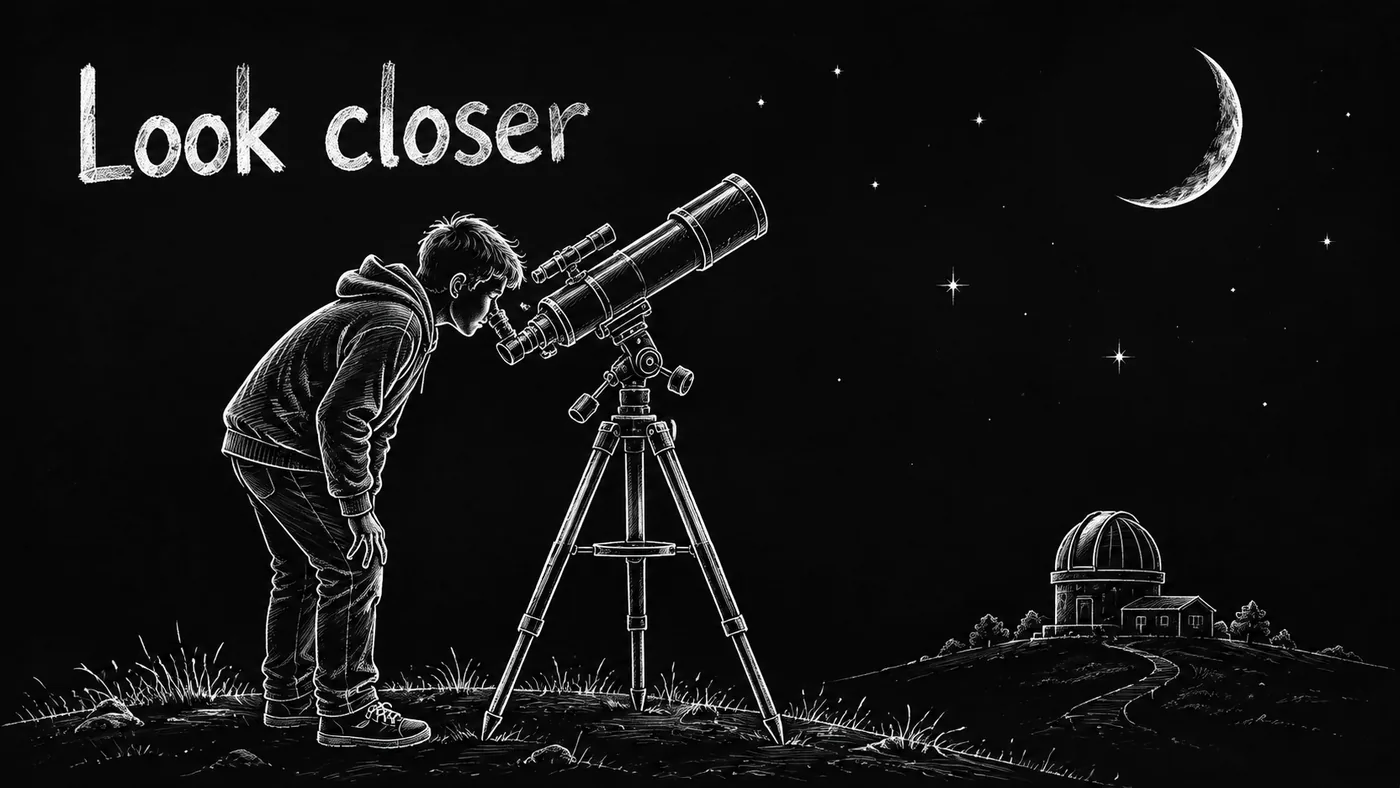
A faceless channel is a channel where the video carries the story without you on camera. Hand-drawn explainers are one of the oldest formats for it, because a pen drawing something on a board keeps people watching while a narrator explains.
This guide is the plan we would follow to start one with Doodaro today. It does not promise views or income. It gives you a niche, a brief, three videos, packaging and a schedule, in that order.
Step 1: pick a niche you can write 50 scripts for
Faceless channels fail on the tenth video, not the first, when the creator runs out of things to say. So the test for a niche is not “is it popular”, it is “can I list 50 titles in an afternoon”.
Do this:
- Write down three subjects you already read about for fun.
- For each one, list 25 questions people ask about it. Use the questions people type into search, the ones with “why”, “how” and “what happens if”.
- Keep the subject where you got to 25 fastest and had ideas left over.
Hand-drawn video suits subjects that need explaining more than showing: how things work, why history happened the way it did, money concepts, health basics, faith reflections, study skills. It suits showing less: product unboxings, travel, anything where the viewer wants the real footage. The niche guide scores six families in detail.
Step 2: write a channel brief
A channel brief is one page that keeps every video consistent. Write it once and paste from it into Doodaro’s Story screen for every project.
Channel: Plain Money Viewer: someone in their first full-time job, 22 to 30, who has never been taught how money works and does not want a lecture. Promise: every video answers one money question in under 6 minutes with one worked example and no jargon. Tone: calm, direct, a little dry. No hype, no “secrets”, no predictions. Structure: the question in the first 10 seconds, the short answer by 30 seconds, one worked example with round numbers, one thing to do this week. Style: Editorial Ink. Voice: one narrator, kept across every video. Format: 16:9 for long videos, 9:16 for shorts. Never: give individual advice, promise returns, name specific products as recommendations.
The brief decides three things you set once in Doodaro: the drawing style, the narrator, and the format. Consistency here is what makes a channel look like a channel.
Step 3: make a 3-video pilot
Before you publish anything, make three videos. Not one: the first is always the hardest, and three tells you what your process costs in time and minutes.
Pick three titles from your list of 25. Choose one easy, one you care about, one that answers the question with the most search interest.
3a. Write the script on the Story screen
- Open a new project. Paste your channel brief’s viewer, promise and tone into What is your video about?, then add the specific question.
- Set Audience, Language, Target length (5 minutes is a good pilot length) and Narrator.
- Click Draft my story. Read the proposal. Click Use this draft.
- Edit the script by hand. Cut every sentence that does not move the answer forward. Read it aloud once; if you stumble, the narrator will too.
- Click Build scenes.
Brief for video 1: “Answer ‘why does my paycheck look smaller than my salary?’ for someone in their first job. Calm and direct. Question in the first 10 seconds, short answer by 30 seconds (taxes, insurance and retirement come out before you see it), one worked example with a $4,000 monthly salary and round numbers, one thing to do this week (read one paystub line by line). No advice, no products.”
The opening, line by line
The first 30 seconds decide whether the viewer stays. Here is the opening the assistant drafted for video 1, edited to the channel brief. Use it as a pattern.
Your contract said four thousand dollars a month. Your bank account says three thousand one hundred. Nobody stole anything. Here is where the other nine hundred went, in three lines on one piece of paper.
Line one: federal and state tax. Line two: health insurance. Line three: your retirement contribution. All three come out before the money reaches you.
Question in the first sentence, answer by the fourth, a promise of structure (“three lines”). Each sentence is one scene: the contract, the bank balance, the paystub, then one line at a time.
The scene descriptions that go with it:
Scene 1: A signed contract on a desk with one number circled. Label: “$4,000”.
Scene 2: A phone showing a bank balance, held in one hand. Label: “$3,100”.
Scene 3: A single paystub with three lines highlighted and everything else blank.
3b. Review the Storyboard
Pick the style from the style card before you generate images. Then:
- Click Generate N images and Generate N voices.
- Click Play storyboard and listen through once.
- For each scene that misses, click Edit, fix the description or narration, and Regenerate that scene only.
- Check every card shows Ready.
On a 5-minute video expect 20 to 35 scenes and two or three that need a redraw. That is normal. The storyboard guide covers each fix.
3c. Set timing in the Editor
Set the reveal time on the first scene to roughly the narration length, hold to 2 seconds, render a scene preview, and adjust. Repeat for a few scenes; most can share the same settings. Give the last scene a 4-second hold. Export as 16:9.
3d. Record what it cost you
For each pilot video, note the time you spent writing, reviewing and fixing, and the exported length. Three videos at 5 minutes is 15 minutes of allowance, well inside the Starter plan’s 120 a month. The time figure tells you what cadence you can sustain.
Step 4: package each video
A drawn video needs a title and a thumbnail that match its look. Do this in Doodaro so the channel stays consistent.
Titles
Write the title as the question the viewer typed, or as the answer with a number. “Why your paycheck is smaller than your salary” beats “Paycheck explained”. Keep it under 60 characters so it does not get cut off.
Thumbnails with the image generator
- Open Image Generator from the sidebar.
- Pick the same style as your video.
- Describe one picture with one subject and, at most, one short label.
- Generate, review, save to Media, and download.
Thumbnail description: “A single paystub with a large bite taken out of one corner, on a plain desk. Label: ‘$4,000?’”
Generate three variations and pick the one that reads at phone size. A thumbnail in the same style as the video tells the viewer what they will get, which is what a thumbnail is for.
Description and chapters
Put the short answer in the first two lines of the YouTube description. Use your scene titles from the Storyboard as chapter markers; they already divide the video into ideas.
Channel art in the same style
Make the channel banner and profile picture with the image generator too, in the same style as the videos. For the profile picture, one object on a plain background: the paystub, a coin, a pen. For the banner, the same object with the channel’s promise as a short label. Save both to Media and download. A channel whose thumbnails, banner and videos share one drawing style looks deliberate before anyone has watched a second of it.
Turning one long video into three shorts
Every long video has three moments that stand alone: the question, the surprising fact, and the one thing to do. Each becomes a 30-to-45-second vertical short.
- Start a new project, set Target length to 30 seconds and the format to Portrait 9:16.
- Paste only the lines for that moment into the script box. Do not draft; you already have the words.
- Click Build scenes. You get two or three scenes.
- Pick the dark counterpart of your long-video style so shorts read on a phone: Midnight Chalk if the long videos are Clearboard, Luminous Chalk if they are Sketch Note.
- Use the same narrator. Generate, review, export.
Three shorts cost about two minutes of allowance and take twenty minutes of your time. They point viewers to the long video and give the channel something to post between uploads.
Step 5: set a cadence you can keep
The single strongest predictor of a channel surviving its first year is whether it kept its schedule. Choose the cadence from your pilot numbers, not from what you hope to do.
| Your pilot time per video | Cadence | Monthly minutes at 5 to 6 min each |
|---|---|---|
| 4 hours or more | One a week | 20 to 24 |
| 2 to 3 hours | Two a week | 40 to 48 |
| Under 2 hours | Three a week plus shorts | 60 to 72 plus shorts |
All three fit on Starter (120 minutes). Add a vertical short from each long video: open the same script, pick the strongest 45 seconds, make a new 9:16 project from it, and export. Shorts are cheap in minutes and give the channel a second front door.
A weekly routine
- Monday: pick the title from the list, write the brief, draft and edit the script.
- Tuesday: build scenes, generate, review the storyboard, fix scenes.
- Wednesday: timing pass, export, make the thumbnail, upload and schedule on YouTube.
- Thursday: cut the short.
- Friday: add five titles to the list so it never runs dry.
Keeping the list full
The list of 50 titles is the channel’s fuel. Add to it every week from three sources: the questions in your own comments, the “people also ask” box under your topic in search, and the moments in your own videos where you said “that is another video”. When you sit down on Monday, the title should already be chosen. Choosing on the day is where cadences die.
Step 6: read the numbers after ten videos, not two
After ten videos on schedule, look at three numbers in YouTube Studio:
- Click-through rate on the thumbnail and title. Low means the packaging does not match what people search for. Fix titles first, then thumbnails.
- Average view duration as a share of the video. A drop in the first 30 seconds means the opening takes too long to get to the question. Use Improve the opening in the story assistant and rebuild those scenes.
- Which videos got most of the views. Make two more on the same question family.
Change one thing at a time so you know what worked.
What Doodaro does and does not do here
Doodaro writes, draws, narrates and renders the video, and makes the thumbnail. It does not upload to YouTube, schedule, or show analytics; you do that in YouTube Studio. It does not add background music or captions; add those in YouTube or your editor if you want them.
Common mistakes in the first month
- Switching styles between videos. Viewers learn your look. Pick one style and keep it for at least ten videos.
- Ten-minute scripts on video one. Start at 4 to 6 minutes. Length comes later, when you know what people finish.
- Fixing scenes in the Editor. Pictures and narration are fixed on the Storyboard. The Editor is for timing.
- Skipping the storyboard preview. Listening to the whole thing once before export catches the mistakes that cost a re-export.
- Judging the channel on video three. Ten videos, one schedule, then decide.
Start with the pilot. Three videos, one style, one voice. Everything after that is repetition, and repetition is the whole game.
Frequently asked questions
What is a faceless YouTube channel?
A channel where the creator never appears on camera. The video is carried by narration and visuals, such as hand-drawn explainers, animation, slides or stock footage. Drawn video suits it because the drawing itself holds attention while a narrator explains.
Do I need to show my face or use my own voice?
Neither. Doodaro's voice library gives you a narrator, and the drawings are the visual. If you want your own voice, you can upload a recording for any scene.
How long does it take to make one faceless video with Doodaro?
The work is mostly writing and reviewing. Expect an hour or two for a 5-to-8-minute video once you have a script: build scenes, check every card, fix the few that miss, set timing, export. Render time depends on length and the queue.
How many videos should I make before I judge the channel?
Make a 3-video pilot before you launch, then publish on a fixed cadence for at least 10 videos before you read the numbers. Early views tell you little; retention and click-through on 10 videos tell you what to change.
Can Doodaro publish to YouTube for me?
No. Doodaro exports an MP4 that you upload to YouTube yourself. There is no publishing, scheduling or analytics inside Doodaro.
Will a faceless channel make money?
Nobody can promise that, and this guide does not. YouTube's monetization rules, your niche and your consistency decide it. Treat the first three months as learning what your audience watches, not as income.