
Sermons and devotionals to illustrated video with Doodaro (2026)
How to turn a sermon into a recap video, a devotional into a daily short, and a passage into a scripture explainer, with boundaries and three worked examples.
Last checked
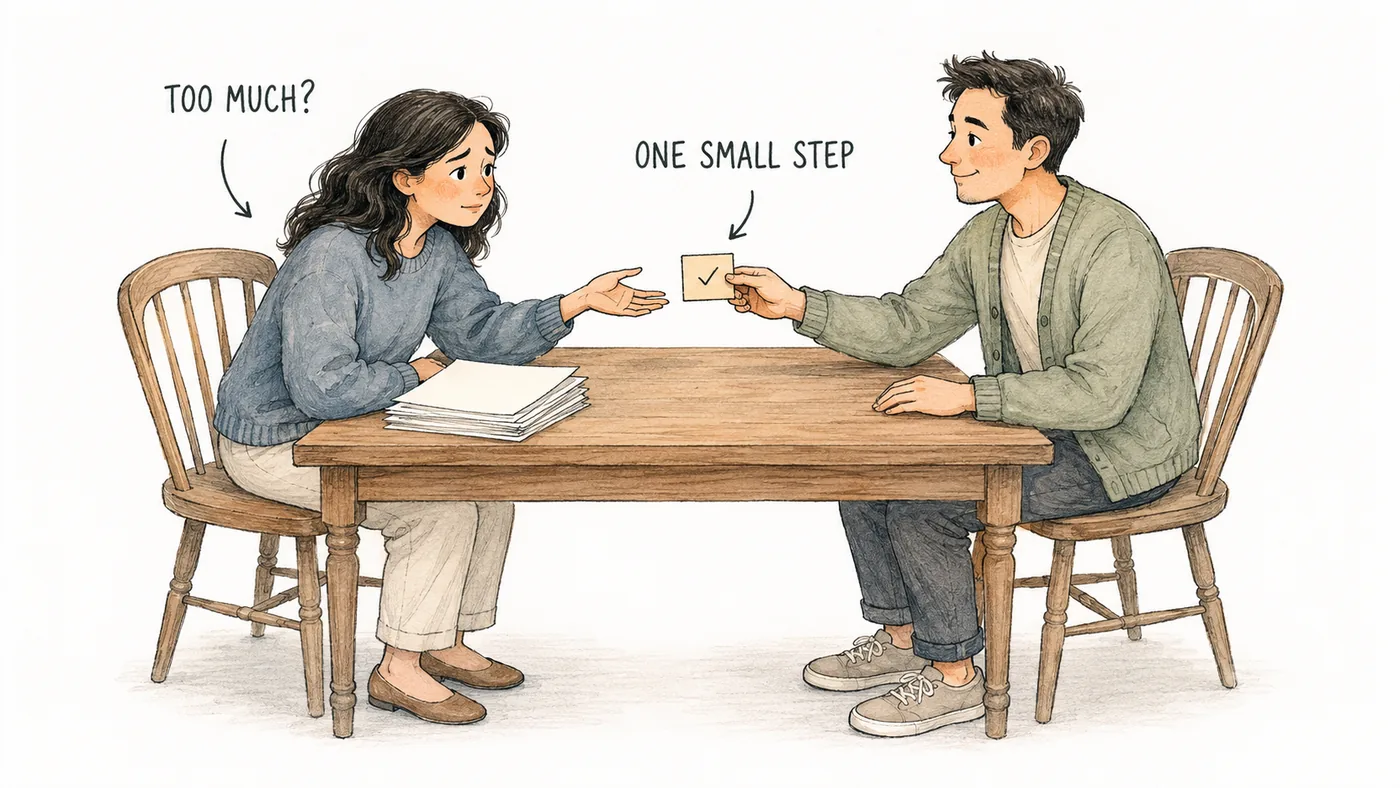
Churches, ministries and devotional channels already have more words than they can use: sermons every week, daily readings, study notes. Drawn video is a good fit for those words because it is slow, still and contemplative, and because it lets you show a shepherd, a road or a lamp without pretending to show God.
This guide covers three formats, the boundaries we recommend, and three worked examples with the exact brief and scene descriptions you can paste into Doodaro.
Three formats
| Format | Length | Scenes | Format | Made from |
|---|---|---|---|---|
| Sermon recap | 3 to 6 min | 15 to 30 | 16:9 | Sunday’s sermon outline or transcript |
| Devotional short | 45 to 90 s | 3 to 5 | 9:16 | One verse and one thought |
| Scripture explainer | 4 to 8 min | 20 to 40 | 16:9 | A passage, its setting, one application |
All three follow the same path in Doodaro: Story → Storyboard → Editor → Export. What differs is the script and the picture descriptions.
Boundaries
Set these before you write a single script, and put them in the brief every time.
- No invented quotes. Quote the passage from the translation you use, word for word, and say which translation. Do not write dialogue for biblical figures beyond what the text records.
- Do not depict the divine. Draw people, places and objects. When the passage speaks of God acting, show the effect on the person or the scene: a hand unclenching, a lamp lit, a door opened. Doodaro draws what you describe, so this rule lives in your picture descriptions.
- Attribute interpretation. “One way to read this is”, “many teachers understand this as”, “our church holds that”. Keep the passage and the reading of it clearly separate in the narration.
- Be careful with the pastor’s words. A recap paraphrases. If you quote the pastor directly, use the recording or the exact words.
- Match the tradition. Some traditions avoid drawing Jesus; others avoid drawing any biblical figure. Decide your rule and write it into the recurring details field.
Put the rules in the brief so the assistant follows them:
Rules: quote scripture only from the NIV, word for word. No dialogue that is not in the text. Do not describe God or Jesus in any picture; show people, places and objects. Mark every interpretation with “one way to read this is”.
Setting up the project
- Style: pick one for the series. Gentle Story Comics is warm and literate. Parchment Ink suits scripture and history. Cut Paper Stories is calm and modern. Midnight Chalk reads well on phones for shorts.
- Narrator: choose one and keep it. Audition three on your hardest line with Try my script with this voice (a verse with a proper noun and a question works well). See the voice guide.
- Recurring characters and details: describe the setting and the people who appear more than once, and state your depiction rule here too.
- Format: 16:9 for recaps and explainers, 9:16 for shorts. Make shorts as separate projects so the pictures are composed tall.
Worked example 1: sermon recap
The sermon was 35 minutes on Luke 15:11-32, the parable of the two sons. The recap is 4 minutes.
Brief (paste into “What is your video about?”)
A 4-minute recap of Sunday’s sermon on Luke 15:11-32 for people who missed the service and for those who want to remember it. Main point: the father runs to both sons. Three moves: the younger son’s return and the father running; the older son’s refusal and the father going out to him; the question the parable leaves open. Quote Luke only from the NIV, word for word. Mark interpretation with “one way to read this is”. Do not describe God or Jesus in any picture; show the father, the sons, the house and the field. End with the question the pastor left us with: which son are you this week?
Audience: our congregation and people who missed Sunday. Target length: 5 minutes (the assistant trims to fit; edit down). Style: Gentle Story Comics.
Scene descriptions to check on the Storyboard
Scene 1: A stone house at the top of a dusty road, a figure standing on the road looking toward the horizon. Label: “Luke 15”.
Scene 4: An older man running down a road, robe gathered in one hand, arms open, toward a thin figure walking with his head down.
Scene 8: A field at dusk with a young man standing with his arms folded, the lit house behind him, music notes drawn faintly coming from its windows.
Scene 11: The older man standing in the field beside the folded-arm son, one hand on his shoulder, both facing the house.
Scene 14: An empty doorway of the house, warm light inside, the road outside. Label: “Which son this week?”
Notice what the pictures do: the father is always a man in a robe, never anything more. The house, the road and the field carry the story.
Pastor’s voice option. Cut two lines from the sermon recording: the opening question and the closing question. Upload each as its own scene’s narration in the Editor. Use a library narrator for the rest.
Worked example 2: devotional short
One verse, one thought, one question. Sixty seconds, vertical.
Brief
A 60-second devotional short on Psalm 23:2-3 for people having a hard week. Read the two verses from the NIV. One thought: rest is something we are led to, not something we earn. Connect it to feeling behind at work. Mark interpretation with “one way to read this is”. Pictures: an ordinary person in an ordinary place; no depiction of God. End with one reflection question.
Audience: adults, phone viewers. Target length: 1 minute. Style: Midnight Chalk. Format: Portrait 9:16.
The script the assistant produced, edited down
“He makes me lie down in green pastures, he leads me beside quiet waters, he refreshes my soul.” Psalm 23, verses 2 and 3.
Notice the verbs. Makes. Leads. Refreshes. One way to read this is that rest is not a reward you earn after the list is done. It is somewhere you are taken.
If your week feels like the list is winning, here is the question: what would it look like to be led to rest today, instead of earning it?
Scene descriptions
Scene 1: A person at a desk late at night, a long paper list curling off the edge of the desk onto the floor. Label: “Psalm 23:2”.
Scene 2: The same person sitting on the grass beside a still pond, the list folded and set aside on a rock.
Scene 3: A single path leading toward low hills, empty, with a small signpost. Label: “led”.
Scene 4: The person’s hands open on their knees, palms up, a cup of water beside them. Label: “today?”
Four scenes, one narrator, 5-second reveals, 2-second holds. Thirty of these a month is about 30 minutes of allowance.
Worked example 3: scripture explainer
A passage, its setting, and one application. Six minutes.
Brief
A 6-minute explainer on the parable of the sower, Mark 4:1-20, for new believers and curious viewers. Structure: the setting (a crowd on a shore, a teacher in a boat); the four soils read from the NIV word for word; what the passage itself says the soils mean (verses 14 to 20); one application, marked as “one way to apply this”. Do not describe Jesus in any picture; show the shore, the crowd, the seed, the four kinds of ground. No invented dialogue.
Audience: new believers. Target length: 5 minutes (extend by editing). Style: Parchment Ink.
Scene descriptions for the four soils
Scene 6: A path of hard packed earth with seed lying on top of it and two birds landing. Label: “the path”.
Scene 8: Thin soil over flat rock with small shoots already wilting under a bright sun. Label: “rocky ground”.
Scene 10: Young shoots crowded by tall thorn bushes, the shoots bent. Label: “among thorns”.
Scene 12: A field of tall grain with a single stalk in the foreground heavy with seed. Label: “good soil”.
Where to attribute. The passage explains itself in verses 14 to 20, so quote that section for what the soils mean. Your application, “which soil describes this season for you”, is marked as one way to apply it.
Reviewing on the Storyboard
Faith videos need one extra pass that other videos do not: a check that every picture keeps the boundaries.
- Open each card with Edit and read the description against your depiction rule.
- If a description drifted (“a glowing figure”, “God’s hand”), rewrite it as an effect on a person or place, and Regenerate that picture.
- Check every quoted verse in the narration against your translation. Fix and Regenerate that scene’s recording.
- Listen through once with Play storyboard.
Only the scenes you change are remade. A 30-scene recap with two boundary fixes takes two regenerations, not thirty.
A weekly rhythm for a church
| Day | Task | Minutes exported |
|---|---|---|
| Sunday evening | Paste the sermon outline into a new project, draft the recap | |
| Monday | Review the storyboard, fix scenes, timing, export the recap | 4 to 6 |
| Tuesday | Cut three devotional shorts from the sermon’s three moves | 3 |
| Wednesday | Two more shorts from the week’s readings | 2 |
| Thursday | Upload the recap and the shorts to your platforms |
Roughly 10 minutes a week, 40 a month, on the Starter plan. Doodaro exports the MP4; uploading to YouTube or social is done by you.
A 30-day devotional series
A daily series is where the per-scene workflow pays off most, because every video shares a structure and only the verse changes.
- Plan the passages first. One book, read in order, is easier to sustain than thirty unrelated verses. Psalms 1 to 30, or a chapter of a gospel a day.
- Make one master project. Write the brief with the rules, the style, the narrator, the 60-second target and the 9:16 format. Make day one all the way to export.
- Copy the pattern, not the project. For each new day, start a new project, paste the same brief, change only the passage and the one thought. The assistant keeps the shape because the brief is the same.
- Batch by week. Write seven briefs on Sunday, build and generate all seven on Monday, review and export across the week. Seven 60-second shorts is seven minutes of allowance.
- Keep a running list of fixes. If a scene description drifted toward depicting the divine on day 4, add the exact wording that fixed it to the brief so days 5 to 30 do not repeat it.
Thirty days is about 30 to 45 rendered minutes. The Starter plan covers it with room for a weekly recap.
Things Doodaro will not do here
- It does not add background music or burned-in captions. Add those in your platform or editor if your tradition uses them.
- It does not clone the pastor’s voice. Use uploaded clips, scene by scene.
- It does not check theology. The boundaries above are yours to hold, on every card.
Keep one style, one narrator and one set of rules across the series, and the channel will look and sound like one voice, which is what a congregation recognizes.
Frequently asked questions
How do I turn a sermon into a video?
Take the sermon's one main point and its three supporting moves, write them as a 3-to-6-minute script, paste it into Doodaro's Story screen and click Build scenes. Review each scene's picture on the Storyboard, choose a warm narrator, set timing and export. The video is a recap, not the full sermon.
Can I use the pastor's own voice?
Yes. Cut the sermon recording into scene-length clips and upload one per scene in the Editor with Upload narration. You can mix the pastor's voice on key lines with a library narrator on the rest. Doodaro does not clone voices.
What should the pictures show in a scripture video?
The passage's own images from everyday life: a shepherd, a table, a road, a lamp. Draw people and places, not the divine. Give each scene one picture, one idea, and a reference label such as Psalm 23:2.
How long should a daily devotional video be?
45 to 90 seconds, vertical 9:16, one verse, one thought, one question. That is three to five scenes. Thirty of them a month is about 30 to 45 rendered minutes, which fits the Starter plan.
Is it OK to add interpretation in the script?
Yes, if you say it is interpretation. Write 'one way to read this is' or 'our church understands this as'. Quote the passage itself accurately from the translation you use, and never put words in a biblical figure's mouth that are not in the text.
Which Doodaro styles suit faith videos?
Gentle Story Comics for warmth, Parchment Ink for scripture and history, Cut Paper Stories for a calm modern look, and Midnight Chalk for phone-first devotional shorts. Pick one and keep it across the series.